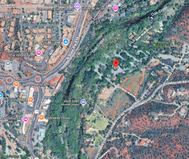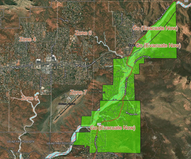


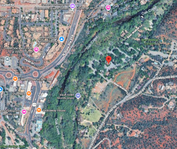
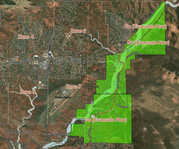











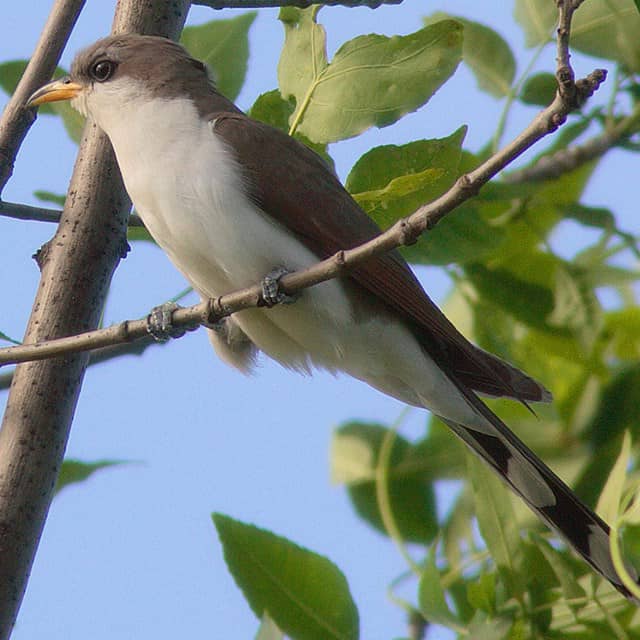
On April 20, the U.S. Fish and Wildlife Service designated 298,845 acres across seven Western states as critical habitat for the western yellow-billed cuckoo. The designation includes several rivers and streams in the Verde Valley, including Oak Creek, the Verde River, parts of West Clear Creek, Beaver Creek, Red Tank Draw and Walker Creek.
The action is part of a bid by FWS to halt a decades-long decline in the yellow-billed cuckoo population west of the Rocky Mountains.
Once a common bird in the west, the migratory yellow-billed cuckoo has disappeared from the Pacific Northwest, and its numbers in California have gone from 15,000 breeding pairs in the 19th century to about 30 in the 1980s.
“Most of the remaining birds are found in isolated patches of riparian habitat along rivers in Arizona, California, and New Mexico,” a National Park Service fact sheet stated.
The yellow-billed cuckoo nests in dense vegetation lining streams and rivers, where they hunt caterpillars, cicadas and other insects.
Rich Armstrong, a site steward and field trip leader for the Northern Arizona Audubon Society, said the yellow-billed cuckoo can be a hard bird to spot. “It’s a bit of a secretive bird,” he said, and it doesn’t usually arrive in the Verde Valley from its South American wintering grounds until June, when it’s hot and there are fewer people birding.
One of the best ways to locate a yellow-billed cuckoo is to listen for its call, he said, but after the bird finds a mate, it stops calling, making it even harder to find.
Scientists believe a major cause of the western yellow-billed cuckoo’s decline is the loss of riparian habit due to “residential development, ground-water pumping, agriculture, flood control and nonnative plant invasions.” NPS also cites pesticides as a possible stressor for the yellow-billed cuckoo.
Impact on Verde Valley
Designations of critical habitat “do not affect activities by private landowners if there is no federal ‘nexus’ — that is, no federal funding or permits required to carry out the activity,” according to FWS.
Federal agencies that fund, permit or approve activities in critical habit are required to consult with FWS before implementing projects in the habitat, to ensure the activity doesn’t destroy or “adversely modify” the habit.
“Critical habitat does not prevent all development or other activities that occur in a designated area,” the FWS wrote on a critical habitat fact sheet.
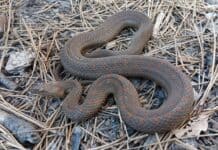
Much of newly designated yellow-billed cuckoo habitat overlaps with previously declared critical habitat for other threatened species, including native fish, the Gila chub and the spikedace, and another bird, the Southwestern willow flycatcher. Stretches of the Verde River, Oak Creek and Spring Creek are also proposed as critical habitat for the northern Mexican gartersnake.
Joe Trudeau, a conservation advocate with the Center for Biological Diversity, cheered the designation, though the organization noted that the final rule included about half of the habitat that was originally proposed in 2014.
Trudeau said that responding to the western yellow-billed cuckoo’s population decline is important because “the cuckoo is kind of a canary in the coal mine.” If the cuckoo is not able to survive in the western U.S., it might be an indication of environmental damage.